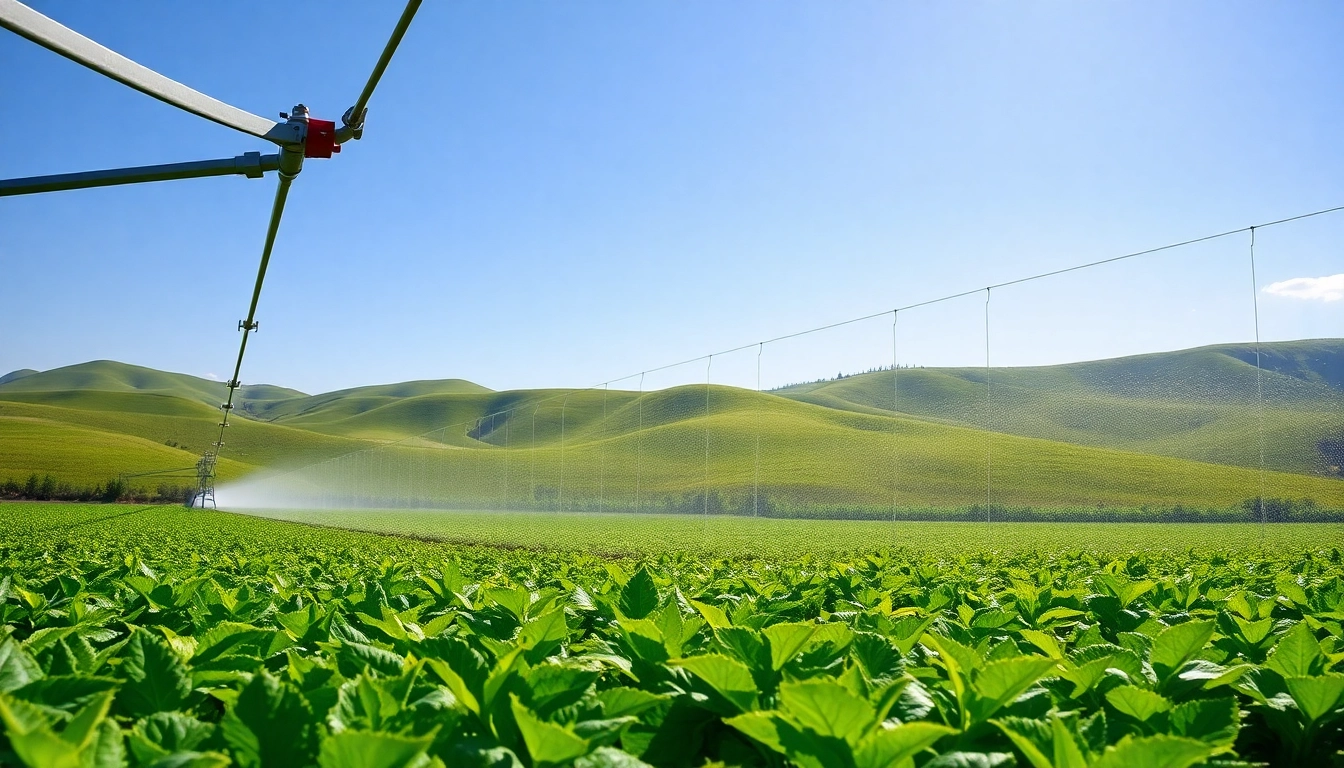
Understanding the Basics of Land Irrigation
Definition and Importance of Land Irrigation
Land irrigation refers to the controlled application of water to soil in order to assist in the growing of agricultural crops, maintenance of landscapes, and revegetation of disturbed soils. This practice is essential for enhancing agricultural productivity, improving food security, and ensuring sustainable land management. Efficient land irrigation practices not only enable farmers to optimize crop yields but also help in mitigating drought impacts and conserving water resources.
Types of Land Irrigation Systems
Understanding various land irrigation systems is crucial for selecting the right method for specific agricultural needs. The main types include:
- Surface Irrigation: Water is applied directly to the soil surface, allowing it to infiltrate the ground. Common forms include furrow, basin, and flood irrigation.
- Drip Irrigation: This system delivers water directly to the root zone of plants through a network of tubing and emitters, minimizing water loss.
- Sprinkler Irrigation: Water is sprayed over crops through pressurized pipes, mimicking natural rainfall and providing a uniform distribution.
- Subsurface Irrigation: Water is applied below the soil surface using buried tubes, which helps reduce evaporation and water runoff.
Key Components of Effective Land Irrigation
Implementing a successful land irrigation system involves key components such as:
- Water Source: Identifying a reliable water source is fundamental, whether it is surface water, groundwater, or recycled water.
- Pumping System: Efficient pumping systems help achieve the necessary water pressure for irrigation systems.
- Distribution Network: Pipes, hoses, and valves form the backbone of irrigation systems, delivering water to specific areas effectively.
- Control Technology: Modern systems often include automation and monitoring technologies for optimized water management.
Best Practices for Implementing Land Irrigation
Site Assessment and Planning
Effective land irrigation begins with a thorough site assessment which includes evaluating soil type, topography, and climate conditions. Proper planning ensures efficient water use and helps in post-implementation evaluations. Soil testing can assist in understanding its qualities, allowing for tailored irrigation strategies that consider drainage patterns and moisture retention needs.
Choosing the Right Irrigation Method
Selection of the right irrigation method depends on various factors including crop type, water availability, and economic considerations. For instance, high-value crops may benefit from precise drip irrigation systems due to their efficiency, while larger fields with grains may utilize surface irrigation for broader coverage. It's crucial to assess the advantages and disadvantages of each method in the context of local requirements.
Maintaining Irrigation Systems for Optimal Performance
Regular maintenance of irrigation systems is essential for ensuring longevity and efficiency. This includes checking for clogged emitters in drip systems, inspecting pumps, ensuring that lines are free of leaks, and confirming that control systems function correctly. Additionally, monitoring the system's performance can provide insights into water distribution and help detect problems early.
Common Challenges in Land Irrigation and Solutions
Water Management Issues
Effective water management is increasingly challenging due to climatic changes, over-extraction, and pollution of water sources. To combat these challenges, farmers can implement water-saving practices such as scheduling irrigations based on weather forecasts, utilizing rain gauges, and employing moisture sensors for better timing and amounts of water application.
Pest Control and Crop Health
Pests can be exacerbated by improper irrigation methods that lead to overly wet conditions, encouraging pest breeding. Integrated Pest Management (IPM) strategies combined with a focus on healthy soil conditions can mitigate pest issues. Utilizing resistant crop varieties and maintaining proper spacing can further enhance crop health.
Adapting to Climate Variability
Climate variability poses a significant challenge to effective land irrigation, resulting in unpredictable water availability. Farmers must adopt adaptive strategies such as crop rotation, seasonal planning, and utilizing drought-resistant crops. Emphasizing the importance of soil health can enhance resilience to climatic stresses as well.
Technological Innovations in Land Irrigation
Smart Irrigation Systems
Smart irrigation systems leverage technology to optimize water usage through real-time data collection and analysis. These systems adjust water delivery based on weather patterns, soil moisture levels, and crop requirements, significantly reducing water waste and improving efficiency.
Automation and Monitoring Technologies
Automated irrigation systems can be remotely controlled through smartphones or computers, allowing farmers to manage water application from anywhere. Soil moisture sensors, weather stations, and satellite imagery facilitate precise irrigation management by providing critical data for informed decision-making.
Data-Driven Irrigation Strategies
Data-driven strategies utilize analytics to assess irrigation performance and inform future practices. By analyzing historical data, farmers can identify trends, improve efficiency, and optimize their systems continuously.
Measuring the Impact of Land Irrigation
Performance Metrics for Irrigation Effectiveness
To evaluate the success of land irrigation practices, several performance metrics can be utilized, including water use efficiency, crop yield per irrigation unit, and cost-effectiveness ratios. These metrics provide valuable insights into the overall sustainability and effectiveness of irrigation strategies.
Case Studies: Successful Land Irrigation Implementations
Reviewing case studies of successful land irrigation implementations can offer practical insights. For instance, several regions have enhanced crop yields while conserving water by transitioning to drip irrigation, emphasizing the effectiveness of targeted water application. Each success story can provide valuable lessons applicable to different contexts and environments.
Future Trends in Land Irrigation
The future of land irrigation is increasingly integrating technology and sustainability. Innovations in water recycling, eco-friendly irrigation methods, and precision agriculture will likely lead to more resilient food systems. Additionally, policies supporting sustainable water management and conservation will shape how agricultural water resources are utilized and managed moving forward.
Frequently Asked Questions (FAQs)
What is land irrigation?
Land irrigation is the controlled application of water to soil to support agriculture, landscape maintenance, and land restoration.
Why is land irrigation important?
Land irrigation is crucial for increasing agricultural productivity, managing water resources effectively, and ensuring food security.
What are the main types of irrigation systems?
Common types include surface irrigation, drip irrigation, sprinkler irrigation, and subsurface irrigation, each with unique benefits.
How can I choose the right irrigation method?
Selecting the right method requires evaluating factors like crop type, water sources, and economic viability for specific agricultural needs.
What should I do if I have water management issues?
Utilize water-saving practices, implement moisture monitoring, and optimize irrigation scheduling to mitigate water management challenges.