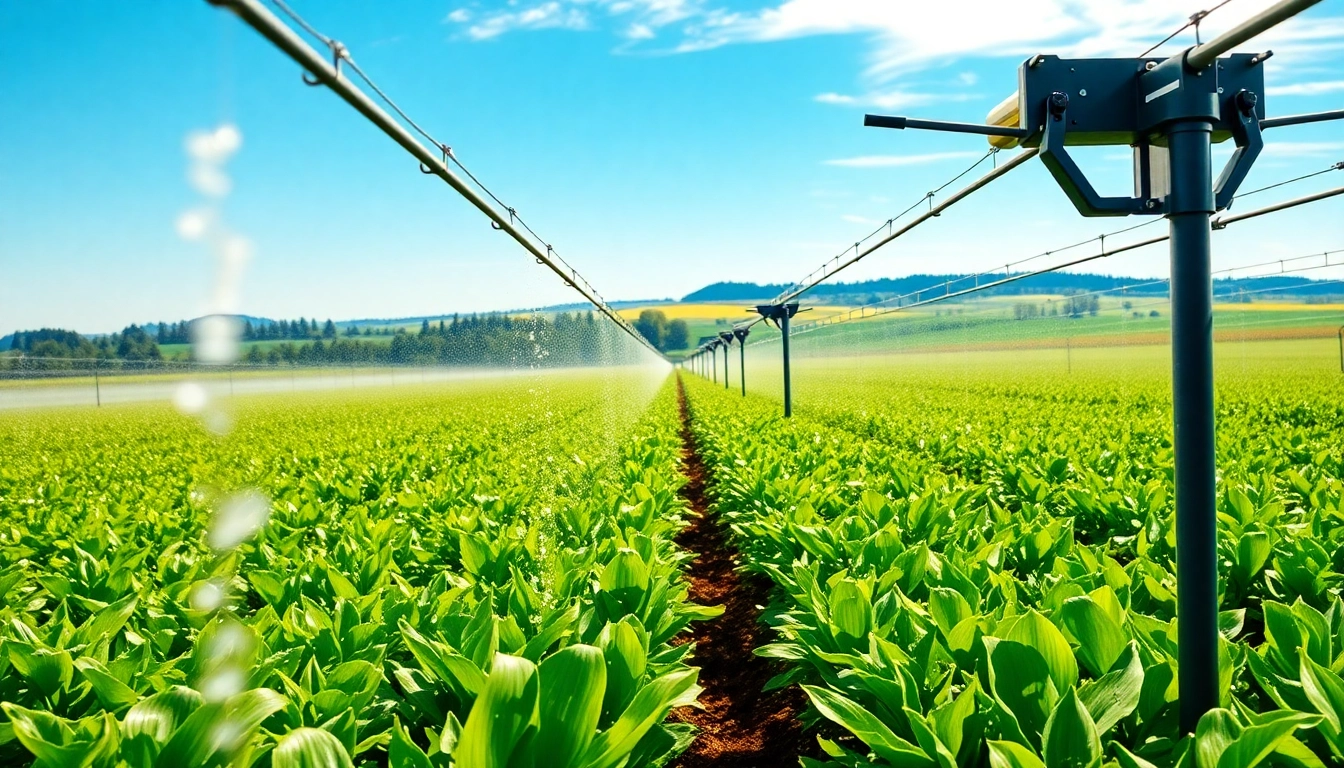
Understanding Land Irrigation Basics
Definition and Importance of Land Irrigation
Land irrigation is the process of applying controlled amounts of water to crops at needed intervals. This practice is crucial for enhancing crop production and ensuring food security, especially in areas where natural rainfall is insufficient. Proper irrigation not only promotes healthy growth but also helps to stabilize food supply and economy in agricultural communities. By systematically managing water resources, farmers can maximize yields and maintain sustainability. Explore more insights into land irrigation strategies that enhance agricultural efficiency.
Types of Land Irrigation Systems
There are several types of land irrigation systems, each with its unique methodologies and advantages. The most common systems include:
- Surface Irrigation: Water is applied directly to the soil surface, allowing it to infiltrate. This method includes flood, furrow, and basin irrigation.
- Drip Irrigation: Delivers water directly to the root zone of plants through a network of tubing. This system minimizes evaporation and runoff.
- Sprinkler Irrigation: Uses a system of pipes to distribute water through sprays, mimicking rainfall. Ideal for various terrains and crops.
- Subsurface Irrigation: Water is applied below the soil surface, targeting plant roots directly and reducing evaporation losses.
Understanding these systems helps farmers choose which will best meet their operational needs, considering their specific soil, crop types, and regional climate conditions.
Benefits of Effective Land Irrigation
Effective land irrigation practices provide numerous benefits:
- Increased Crop Yields: Consistent water supply leads to healthier plants and higher productivity.
- Improved Soil Health: Regular irrigation prevents soil degradation and erosion while enhancing nutrient absorption.
- Water Efficiency: Using advanced techniques such as drip irrigation can significantly reduce water waste.
- Adaptability to Climate Change: Diversifying irrigation techniques allows farmers to better cope with changing weather patterns and prolonged droughts.
Key Components of Land Irrigation
Irrigation Water Sources
The first step in land irrigation is sourcing adequate water. Common sources include:
- Surface Water: Rivers, lakes, and reservoirs that are easily accessible.
- Groundwater: Water extracted from aquifers through wells; often more reliable in arid regions.
- Rainwater Harvesting: Collecting and storing rainwater for irrigation use.
The choice of water source often depends on availability, cost, and water quality, directly impacting irrigation effectiveness.
Irrigation Infrastructure Elements
A robust irrigation system comprises several essential components:
- Pipelines: Transport water from the source to fields.
- Pumps: Move water efficiently, especially from groundwater sources.
- Valves: Control water flow within the irrigation system.
- Filters: Remove debris and particles to protect irrigation equipment.
Automation and Technology in Land Irrigation
Modern irrigation relies increasingly on technology to optimize water usage:
- Smart Sensors: Monitor soil moisture levels and adjust irrigation automatically.
- IoT Devices: Enable remote management of irrigation systems, providing real-time data.
- Weather Forecasting Tools: Help predict rainfall and adjust irrigation schedules accordingly.
These advancements reduce human error and promote efficient water use while improving overall productivity.
Strategies for Optimizing Land Irrigation
Assessing Soil and Crop Needs
To optimize irrigation, understanding soil characteristics and crop requirements is essential:
- Conduct soil tests to evaluate moisture-holding capacity and nutrient needs.
- Choose crops that are suited to the local climate and soil type.
Implementing these assessments ensures that irrigation practices align with the specific needs of crops and soils, promoting efficiency.
Timing and Frequency of Irrigation
The timing and frequency of irrigation can greatly influence crop success:
- Watering during cooler parts of the day can minimize evaporation.
- Adjusting irrigation schedules based on crop stages helps maximize nutrient uptake.
Utilizing data from soil moisture sensors can aid in making informed timing decisions.
Water Conservation Techniques in Land Irrigation
Conservation should be a priority in any irrigation strategy:
- Mulching: Reduces evaporation by covering the soil with organic material.
- Crop Rotation: Alternating crops improves soil health and reduces water demand.
- Rainwater Harvesting: Encouraging water collection during rainfalls can supplement irrigation needs.
These techniques not only help conserve water but also contribute to more sustainable agricultural practices.
Challenges in Land Irrigation
Climate Variability and Water Scarcity
The ever-changing climate presents significant challenges for land irrigation:
- Increased frequency of droughts necessitates better water management strategies.
- In some regions, competition for water resources can hinder irrigation effectiveness.
Farmers must adapt their irrigation practices to be more resilient to these developments, often leveraging technology to ensure water availability.
Pests and Diseases Affecting Irrigation
Pests and plant diseases can devastate crops if left unchecked:
- Proper irrigation management can help mitigate disease by preventing overwatering.
- Integrating pest management strategies with irrigation can enhance crop resilience.
Employing a proactive approach is essential to maintaining both crop health and irrigation effectiveness.
Cost Considerations for Land Irrigation Systems
Implementing an irrigation system requires substantial investment, including:
- Initial setup costs for infrastructure and technology.
- Ongoing maintenance expenses associated with pumps, pipes, and automation systems.
However, the right irrigation strategies can lead to long-term savings and increased profits by promoting higher yields and more efficient water use.
Future Trends in Land Irrigation
Innovative Technologies on the Horizon
The future of land irrigation is likely to be shaped by emerging technologies:
- Artificial Intelligence: Streamlining irrigation management through predictive analytics.
- Advanced Materials: Improved durability and efficiency of irrigation systems.
- Sustainable Practices: Increasing integration of eco-friendly methods to reduce water waste.
These innovations promise to enhance irrigation efficiency, ensuring sustainable agricultural practices.
Policy Changes and Environmental Considerations
Government regulations and environmental concerns will significantly influence land irrigation practices:
- Stricter water usage policies may encourage farmers to adopt more sustainable practices.
- Incentives for water conservation can drive innovation in irrigation technologies.
By understanding and adapting to these shifts, farmers can ensure compliance and contribute to environmental sustainability.
Community Involvement in Sustainable Practices
Community engagement is vital in developing sustainable irrigation practices:
- Local workshops can increase awareness of efficient irrigation methods.
- Collaborative projects can pool resources for better water management solutions.
Strong community involvement not only improves irrigation practices but also fosters a culture of sustainability within agricultural sectors.
Frequently Asked Questions
What is land irrigation?
Land irrigation is the artificial application of water to support plant growth, typically used in agriculture to ensure optimal moisture levels for crops.
What are the main types of land irrigation systems?
The main types include surface irrigation, drip irrigation, sprinkler irrigation, and subsurface irrigation, each with distinct applications and advantages.
How can I optimize my irrigation practices?
Optimizing practices involves assessing soil needs, timing irrigation appropriately, and employing water conservation techniques to maximize efficiency.
What challenges do farmers face with land irrigation?
Farmers face challenges such as climate variability, pests and diseases, and the costs associated with establishing and maintaining irrigation systems.
What trends are emerging in land irrigation?
Emerging trends include innovative technologies like AI, policy changes focusing on sustainable practices, and growing community involvement in irrigation strategies.