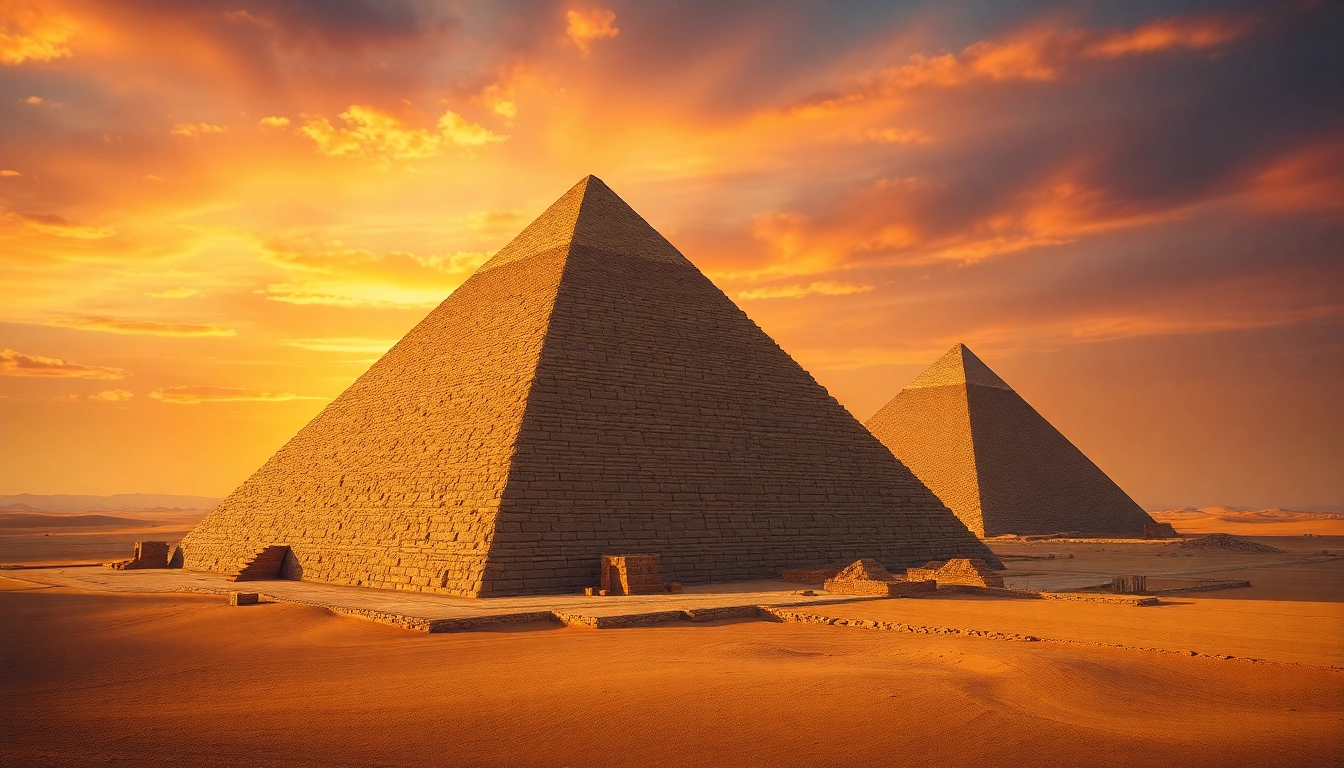
Introduction to Piraminds
The piraminds have captivated the imagination of historians, archaeologists, and travelers for centuries. These monumental structures are not only architectural feats but also symbols of a civilization that thrived thousands of years ago. From their imposing size to their intricate design, piraminds reflect the complex beliefs and values of ancient Egyptians. For a deeper exploration of these ancient marvels, visit piraminds to learn more about their significance and legacy.
Historical Significance of Piraminds
Piraminds served as monumental tombs for pharaohs, representing a bridge between their earthly existence and the afterlife. The most famous of them, the Great Pyramid of Giza, was constructed around 2580–2560 BCE. It exemplifies the ancient Egyptians' ingenuity and their belief in the afterlife, showcasing their dedication to ensuring a smooth transition for their rulers.
These structures were central to ancient Egyptian politics and religion, symbolizing the absolute power of the pharaohs. The construction of piraminds involved large-scale mobilization of resources, demonstrating the organizational skills of the Egyptians. Hence, they stand not just as tombs but as lasting legacies of a civilization that shaped the course of history.
Key Characteristics of Piraminds
Piraminds are characterized by their triangular shape and large base, often built using limestone or sandstone. The four sides typically represent the rays of the sun, symbolizing the pharaoh’s connection to the divine. The use of precise astronomical alignments in their construction has led to them being viewed as not only tombs but also as celestial observatories.
The interior chambers of piraminds are elaborate, designed with symbolic decorations that reflect beliefs related to death and rebirth. The layout often includes a burial chamber, passageways, and hidden rooms, all constructed with remarkable precision, showcasing advanced engineering knowledge that still fascinates experts today.
Myths and Legends Surrounding Piraminds
Throughout history, various myths and legends have emerged surrounding piraminds. One of the most enduring myths is that of hidden treasures and mysterious voids within the structures. These tales have fueled countless explorations and archaeological digs, hoping to uncover long-lost artifacts.
Additionally, the legend of the Sphinx, often associated with the Great Pyramid, adds to the aura of mystery surrounding piraminds. Stories of the Sphinx's riddles and its supposed supernatural powers have captured the imagination of those seeking to understand ancient Egyptian beliefs and their understanding of the universe.
Construction Techniques of Piraminds
Materials Used in Building Piraminds
The primary materials used in constructing piraminds included limestone, granite, and basalt. Limestone was commonly utilized for the outer casing, which gave the piraminds their smooth appearance, while granite, used for the inner chambers and sarcophagus, provided strength and durability. These materials were sourced from nearby quarries, with immense effort invested in transporting them to construction sites, often using sledges and waterways.
The use of various tools, such as copper chisels and wooden sledges, showcases the advanced technology of the time. The precision with which these materials were cut and assembled indicates a sophisticated level of craftsmanship that has continued to astound modern builders.
Labor Force Behind the Piraminds
Contrary to popular belief, the labor force responsible for building piraminds was not composed of slaves but rather skilled workers and craftsmen who took pride in their work. These laborers were often organized into teams, each with specific roles, from stone masons to engineers. They lived in nearby temporary settlements, highlighting the scale of the workforce mobilized for such an undertaking.
Labor conditions were likely better than assumed, with the workers receiving food, shelter, and regular wages. This organization and care for workers not only facilitated the construction of the piraminds but also demonstrated the central authority of the pharaoh and the state's capacity to manage large-scale projects.
Engineering Marvels of Piraminds
The engineering behind the piraminds remains a subject of study and admiration. The Great Pyramid of Giza, for instance, was originally 146.6 meters tall and constructed with precise alignment to the cardinal points. This alignment was achieved using simple tools and advanced observational techniques, a testament to the understanding of geometry and astronomy that ancient Egyptians possessed.
Numerous theories exist about the construction methods, including the use of ramps, levers, and counterweights. Each approach offers insights into the ingenuity required to lift and place massive stones, some weighing several tons. Such engineering feats raise questions about how these ancient builders achieved their goals without modern equipment, leaving many fascinated by the legacy of their methods.
Cultural and Religious Importance of Piraminds
Role of Piraminds in Ancient Egyptian Beliefs
Piraminds played a critical role in the religious practices of ancient Egypt, representing the journey of the soul into the afterlife. Egyptians believed in a life after death where the pharaoh would ascend to the heavens. Piraminds were designed to aid this transition, housing the deceased's body alongside goods and offerings that would be necessary in the afterlife.
The elaborate burial rituals associated with piraminds highlighted the importance of ensuring a successful afterlife, demonstrating ancient Egyptians' beliefs in immortality and the divine order of the universe. Thus, piraminds not only served as tombs but as vital components of the spiritual landscape of ancient Egypt.
Rituals Associated with Piraminds
Numerous rituals were performed in and around piraminds, especially during the burial of pharaohs. The opening of the mouth ceremony, for instance, was crucial in preparing the deceased for the afterlife, allowing them to eat and speak in the realm beyond. Rituals often involved priests who performed sacred rites to honor the pharaoh and enhance their chances of a favorable rebirth.
Additionally, the placement of offerings, including food, jewelry, and figurines, reflected a belief in providing for the deceased in the afterlife, illustrating the importance of generosity toward the dead in ancient Egyptian culture.
Artifacts Found Within Piraminds
The discovery of artifacts within piraminds often tells us more about the civilization that built them. Archaeological findings frequently include mummified remains, intricately designed sarcophagi, and items depicting daily life, religious beliefs, and societal hierarchies. Notably, the treasures found within Tutankhamun's tomb provided a wealth of knowledge about royal life and the artistry of the time.
Artifacts have also revealed interactions with other cultures, showcasing trade relationships and the exchange of ideas that enriched ancient Egyptian culture. Each discovery contributes to our understanding of the complexities of life in ancient Egypt.
Tourist Attractions and Preservation of Piraminds
Popular Piraminds to Visit
The piraminds of Giza, including the Great Pyramid, the Pyramid of Khafre, and the Pyramid of Menkaure, are among the most visited tourist attractions globally. Their proximity to Cairo makes them easily accessible, drawing millions of visitors each year who are eager to witness their grandeur firsthand. The pyramids, along with the Great Sphinx, are often included in tours that highlight the rich history and culture of ancient Egypt.
Beyond Giza, the Step Pyramid of Djoser in Saqqara and the Bent Pyramid at Dahshur are also significant sites that showcase the evolution of pyramid construction techniques, offering insight into the architectural advancements of the ancient Egyptians.
Efforts in Restoration and Conservation
Preservation of piraminds is crucial, given their historical and cultural significance. Various national and international organizations work tirelessly on restoration projects to protect these ancient monuments from erosion, pollution, and environmental threats. Regular maintenance and restoration efforts include reinforcing structural integrity, cleaning façades, and safeguarding surrounding areas from modern encroachment.
Efforts to promote sustainable tourism also aim to reduce the impact of large crowds, ensuring that future generations can appreciate these magnificent structures while preserving their integrity.
The Future of Piraminds Tourism
As global interest in ancient civilizations continues to grow, tourism to piraminds is expected to rise. Advancements in technology, such as virtual reality tours and augmented reality applications, may provide new, immersive ways to experience these historical sites. Future tourism initiatives will need to balance accessibility with the preservation of these significant structures.
There is an increasing emphasis on educating visitors about the importance of conservation and respect for cultural heritage, ensuring that the legacy of the piraminds endures long into the future.
FAQs about Piraminds
What are the most famous piraminds?
The Pyramids of Giza, particularly the Great Pyramid, are the most renowned examples of piraminds in Egypt.
How were the piraminds constructed?
Ancient Egyptians utilized advanced engineering techniques, skilled labor, and locally-sourced materials to construct the piraminds.
What is inside the piraminds?
Inside the piraminds, there are burial chambers, passageways, and various artifacts meant for the afterlife.
Why are piraminds significant in history?
Piraminds served as tombs for pharaohs and reflect the architectural prowess and cultural beliefs of ancient Egypt.
Can we visit the piraminds today?
Yes, many piraminds, especially those in Giza, are popular tourist attractions, offering guided tours to explore their history.